

Częstochowa - duchowa stolica Polski
Pierwsze wzmianki na temat Częstochowy pochodzą z XIII w, natomiast dopiero w XVI wieku uzyskała ona prawa miejskie. Do XVIII stulecia miasto terytorialnie przynależało do Rzeczpospolitej. Natomiast po pierwszym rozbiorze Polski miasto włączono do Prus. W latach 1807-1815 Częstochowa stanowiła część Księstwa Warszawskiego, a w okresie 1815-1918 należała do Królestwa Polskiego. Od roku 1918 Częstochowa jest integralną częścią Państwa Polskiego, służąc mu pomocą w trudnych chwilach i udzielając schronienia np. powstańcom śląskim i warszawskim. W 1944 roku, po upadku Warszawy, Częstochowa została stolicą Podziemnego Państwa Polskiego. Od 5 października 1944 roku siedziba Komendy Głównej Armii Krajowej funkcjonowała właśnie tutaj. Mieściła się przy ul. 7 Kamienic 21 i pełniła swoją funkcję do 19 stycznia 1945 r.
Polskie Narodowe Sanktuarium Maryjne jest jednym z najważniejszych sanktuariów w świecie. Jasnogórskie Sanktuarium wraz z twierdzą mają szczególną wartość w dziejach Narodu Polskiego. Znaczenie religijne Sanktuarium związane jest z historyczno-patriotycznym duszpasterstwem pielgrzymkowym. Twierdza stanowiła natomiast centrum obrony narodu przeciw okupantom i reżimom. Dodatkowo, Jasna Góra posiada dużą wartość naukową - stanowią o niej np. archiwum, biblioteki (stara i nowa), muzea historyczne i artystyczne z bogatymi zbiorami.
Termin wystawy: 1-31 grudnia 2025 r., wstęp wolny
opr. Julia Dziwoki i Beata Urbanowicz
CZĘSTOCHOWA - THE SPIRITUAL CAPITAL OF POLAND
The first mention of Częstochowa dates back to the 13th century, but it was not until the 16th century that it received city rights. Until the 18th century, the city was territorially part of the Polish-Lithuanian Commonwealth. However, after the First Partition of Poland, it was incorporated into Prussia. From 1807 to 1815, Częstochowa formed part of the Duchy of Warsaw, and from 1815 to 1918, it belonged to the Kingdom of Poland. Since 1918, Częstochowa, as a city, has been an integral part of the Polish State, providing assistance in times of trouble and providing shelter, for example, to Silesian and Warsaw insurgents. In 1944, after the fall of Warsaw, Częstochowa became the capital of the Polish Underground State. From October 5, 1944, the headquarters of the Home Army Headquarters operated here. It was located at ul. 7 Kamienic 21 and served its purpose until January 19, 1945.
The Polish National Marian Sanctuary is one of the most important sanctuaries in the world. The Jasna Góra Sanctuary and its fortress hold particular value in the history of the Polish Nation. The Sanctuary's religious significance is linked to the historical and patriotic pastoral pilgrimages. The fortress, in turn, served as the center of the nation's defense against occupiers and regimes. Additionally, Jasna Góra has significant scientific value, including its archives, old and new libraries, and historical and art museums with rich collections.
Exhibition dates: December 1-31, 2025, free admission
Prepared by Julia Dziwoki and Beata Urbanowicz

Galeria Biblioteki Uniwersyteckiej, widok ogólny na fotoramy i gabloty
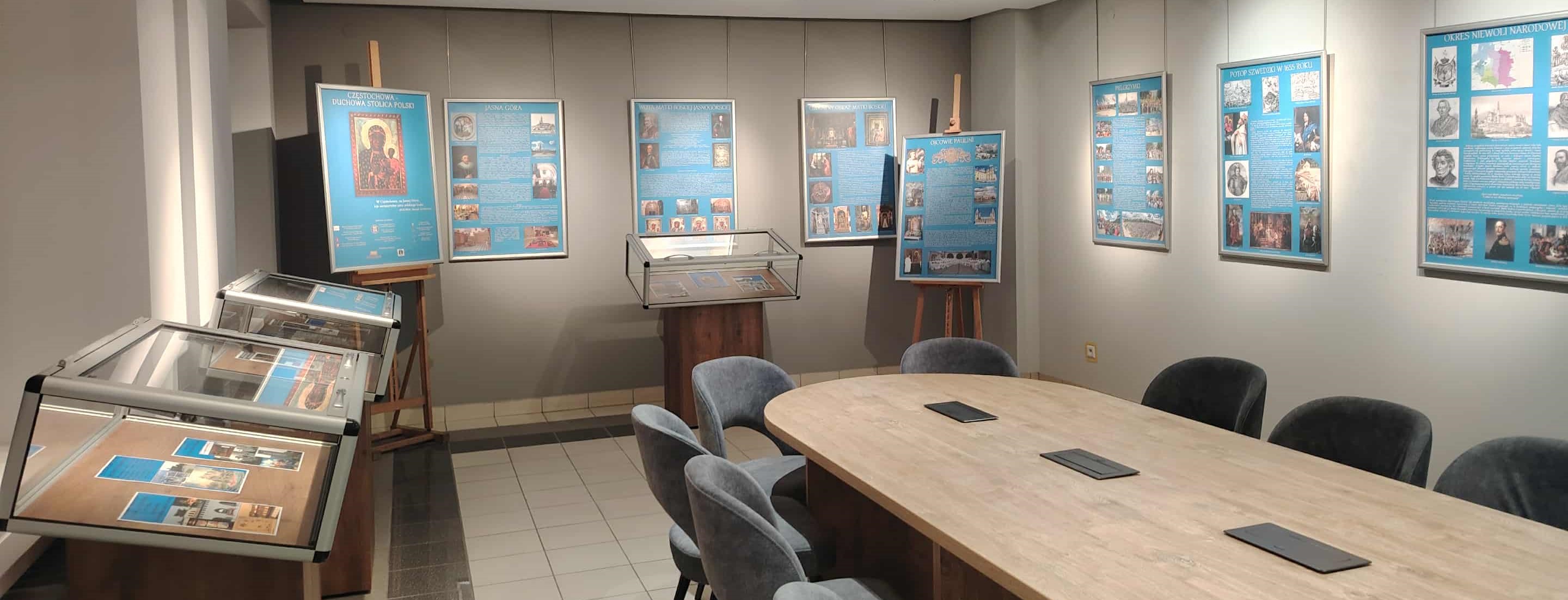
Galeria Biblioteki Uniwersyteckiej, widok ogólny
Data dodania: 04 grudnia 2025