

MULTI-PROFILE MEDICAL SIMULATION CENTRE - A TRAINING GROUND FOR FUTURE HEALTHCARE PROFESSIONALS AT JDU’S COLLEGIUM MEDICUM
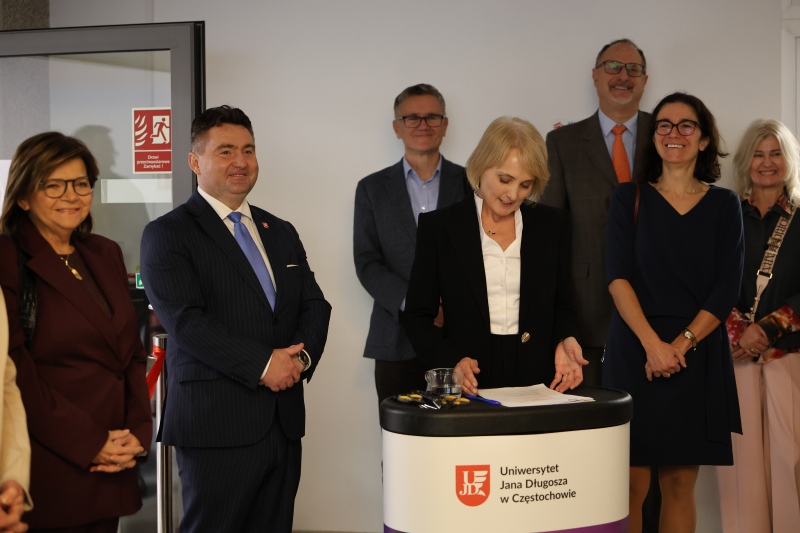
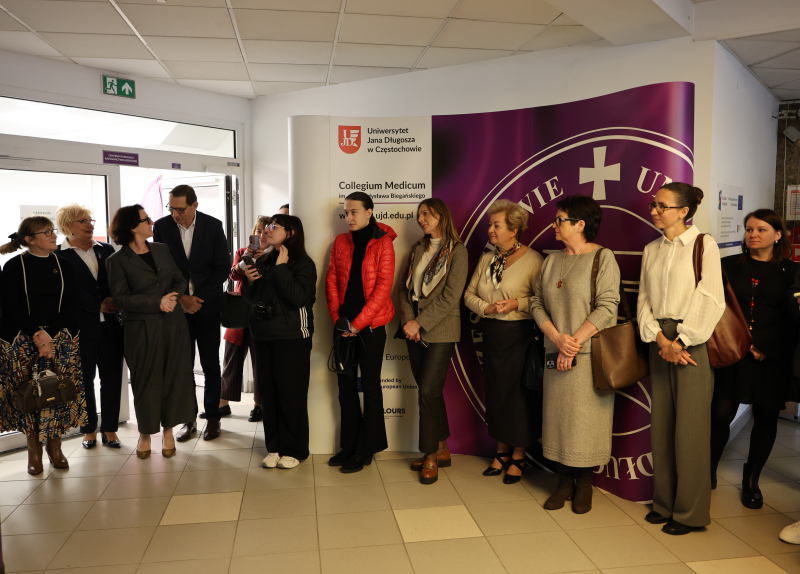
The Multi-Profile Medical Simulation Centre at the Dr Wladyslaw Bieganski Collegium Medicum of Jan Dlugosz University in Czestochowa was officially opened on 3 November 2026, in the presence of politicians, local government representatives and healthcare professionals.
The opening ceremony was a grand yet elegant occasion, reflecting the unique character and significance of both the Centre and the event.
‘The opening of the Centre marks a very important day in the life of our University,’ said prof. Bogusław Przywora, Acting Rector of JDU. ‘What once seemed like a distant dream, supported by our efforts to launch this investment project, has now become a reality. Today, we are officially opening this exceptional Centre for use. It will become an extremely important facility for educating students on the Medicine programme, but not exclusively. Students from other medical programmes offered by Collegium Medicum will also be able to benefit from its facilities. I have no doubt that it will become one of the University's flagship facilities and a source of pride not only for Czestochowa and the region, but also for Poland as a whole. The equipment available here enables us to provide education of the highest standard. We've made it!’
Prof. Magdalena Myga-Nowak, Dean of Collegium Medicum, also spoke highly of the Centre.
‘The equipment available here makes it possible to recreate realistic situations that future doctors, as well as nurses and paramedics, encounter in their everyday professional practice,’ the Dean explained. ‘The simulators allow students to practise a wide range of scenarios based on situations that occur in hospital wards. We have highly advanced simulators representing newborn babies, young children and adults. They will enable students to practise scenarios encountered, for example, in hospital emergency departments, wards and operating theatres. Students will learn specific procedures and develop the skills needed to help those in need, including saving lives and delivering babies. All activities will take place under the supervision of academic staff and technical personnel. Sessions can be recorded and subsequently analysed to identify students' strengths and areas requiring improvement. The Centre will play a vital role in preparing future healthcare professionals to save lives.’
The Centre has also received high praise from Collegium Medicum students, who expressed their appreciation for the opportunities it offers.
‘I am delighted that our University has such a Centre. I cannot wait to attend classes in these modern facilities, equipped with such advanced technology,’ said Szymon Subik, a third-year Medicine student at JDU’s Collegium Medicum and a member of the Czestochowa branch of IFMSA-Poland.
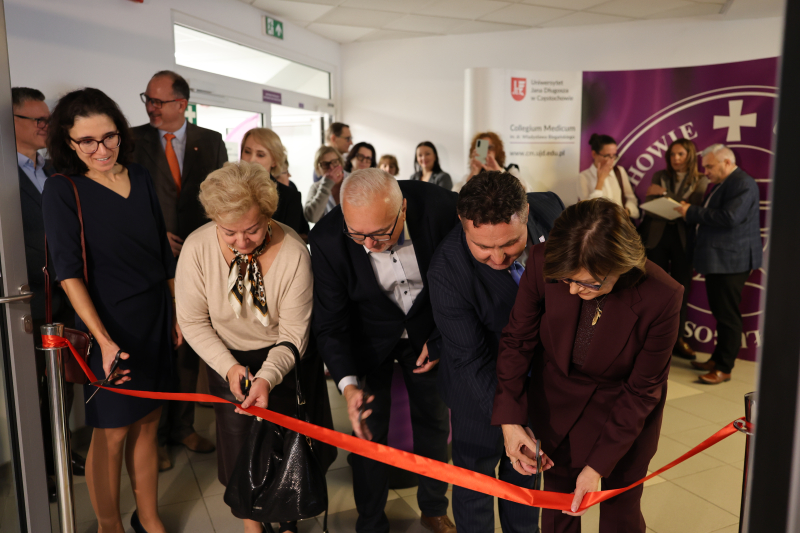
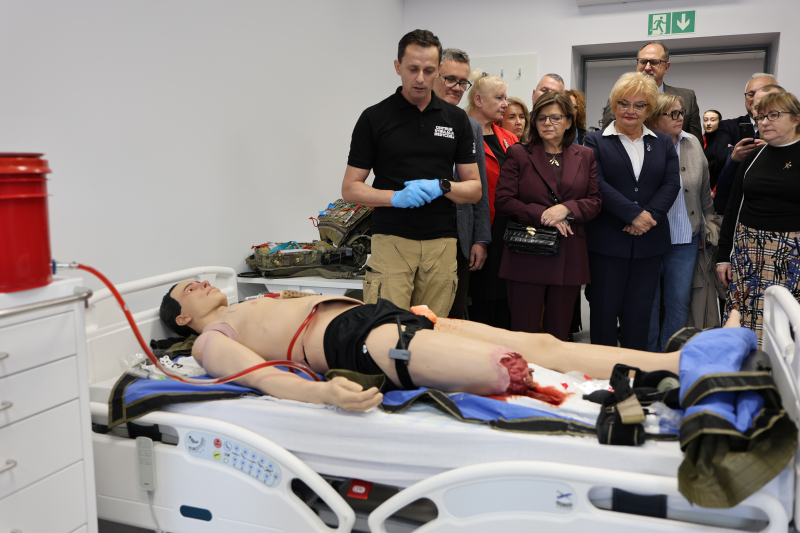
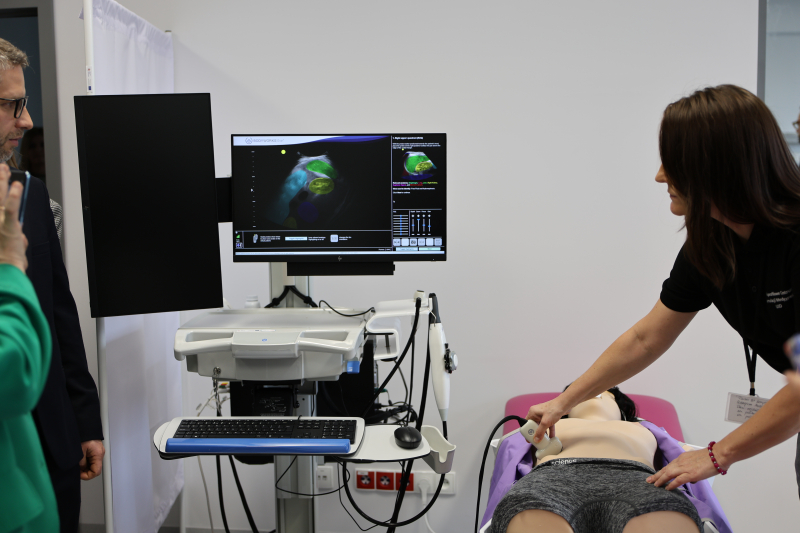
Following the ribbon-cutting ceremony, which symbolised the official opening of the Centre and its handover for use, the guests were invited to explore the facilities. They showed great interest in the demonstrations of the equipment presented by Collegium Medicum staff, who explained its capabilities, demonstrated the simulators and introduced visitors to the Centre's supporting facilities.
The University and Collegium Medicum authorities emphasised that the establishment of the Centre would not have been possible without the commitment of numerous University employees and the support of many external contributors. During the opening ceremony, all those involved were warmly thanked for their contribution.
About the Centre
The Multi-Profile Medical Simulation Centre (WCSM) is a complex of rooms connected by an integrated supervision and monitoring system, enabling practical teaching in conditions that closely replicate real-life clinical environments. The Centre covers approximately 700 square metres and is located in adapted premises in a JDU building at 13/15 Armii Krajowej. Construction work began in early March 2026 and was completed at the end of June 2026.
The JDU Multi-Profile Medical Simulation Centre comprises the following teaching facilities:
- Primary Healthcare (PHC) simulation room;
- Emergency Department (ED) simulation room;
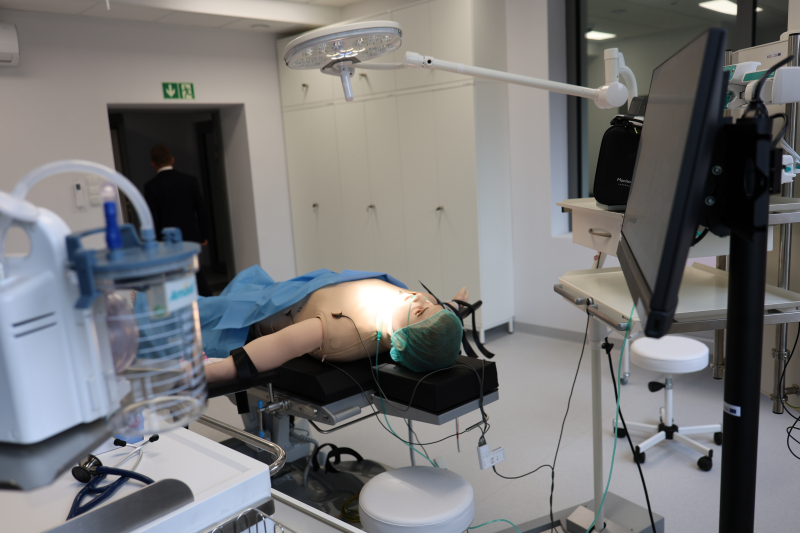
- operating theatre simulation room, including an airlock and scrub-up area;
- anaesthesiology simulation room;
- delivery room simulation suite;
- surgical and technical skills room;
- debriefing room;
- simulated patient practice room.
The Centre will primarily serve students on the Medicine programme. However, students from all other programmes offered by Collegium Medicum will also be able to attend classes there, as will students from other UJD programmes whose curricula include subjects such as basic first aid.
The Centre will host classes in a wide range of subjects, including:
- first aid and basic nursing skills;
- interpersonal communication in medicine – a module shared with students of Paramedicine and Nursing;
- introduction to internal medicine;
- battlefield medicine;
- laboratory diagnostics;
- internal medicine;
- patient communication in simulated settings;
- communicating with patients in challenging situations;
- psychiatry;
- anaesthesiology and intensive care;
- introduction to surgery;
- emergency medicine;
- paediatrics;
- neonatology.
It is worth emphasising that learning in simulated environments enables students to adapt more easily to clinical placements and practical classes in real healthcare settings. The Centre also provides facilities for conducting mini-OSCE and OSCE examinations (Objective Structured Clinical Examination) for programmes requiring this type of assessment, including Medicine, Paramedicine and Nursing.
The Centre is equipped with a wide range of high-fidelity patient simulators covering different age groups and clinical scenarios. Students will be able to work with adult patient simulators, including SimMan 3G PLUS, with a Critical Care configuration offering advanced ventilation and respiratory mechanics simulation, as well as a version designed for scenarios involving geriatric patients. Paediatric and neonatal training is supported by simulators such as SimBaby, MegaCode Kid, SimNewB and Premature Anne, while obstetric training is facilitated by advanced systems including MamaAnne and PROMPT Flex.
Another important component of the Centre's equipment is the KbPort V7.0 AV system, which enables teaching sessions to be recorded, simulation scenarios to be monitored and debriefing sessions to be conducted. The system also supports the organisation and delivery of OSCE examinations, allowing the Centre's infrastructure to be used both for teaching and for assessing students' clinical skills.
These facilities are complemented by VR and e-learning solutions, which extend traditional simulation training through innovative teaching methods.
The greatest strength of the Centre's design lies in its ability to integrate multiple elements of medical education into one coherent learning process. Students can examine a patient, make a preliminary diagnosis, carry out appropriate diagnostic tests, make clinical decisions, administer treatment, evaluate its effectiveness and subsequently review their actions during a debriefing session. This means that simulation becomes much more than a place to practise individual procedures: it provides a safe learning environment in which students can prepare for real clinical practice and the responsibility of caring for patients.
The total cost of constructing and equipping the Centre amounted to approximately PLN 24 million.
The investment was carried out under Measure D2.1.1: Investments related to the modernisation and upgrading of teaching facilities and increasing admission limits for medical degree programmes, as part of the National Recovery and Resilience Plan (NRRP), Component D – ‘Efficiency, Accessibility and Quality of the Healthcare System’.
It should be emphasised that the project was financed by European Union funds under the National Recovery and Resilience Plan, together with JDU's own financial contribution.
Date added: 11 April 2026